


Recent posts
Oct 03, 2026
Oct 03, 2026
Coral, Amber and Silver: Reading...
Oct 03, 2026
The Silver of Tiznit: Where...
- Oct 03, 2026
- By RAIS
- 0 comments
Coral, Amber and Silver: Reading the Colors of Amazigh Jewelry
An Amazigh necklace is never only an arrangement of beads. Each material was chosen for what it could give: protection, abundance, health, a link to the earth and to the ancestors. To look closely at an antique piece is to read a quiet language of color.
Silver: purity and blessing
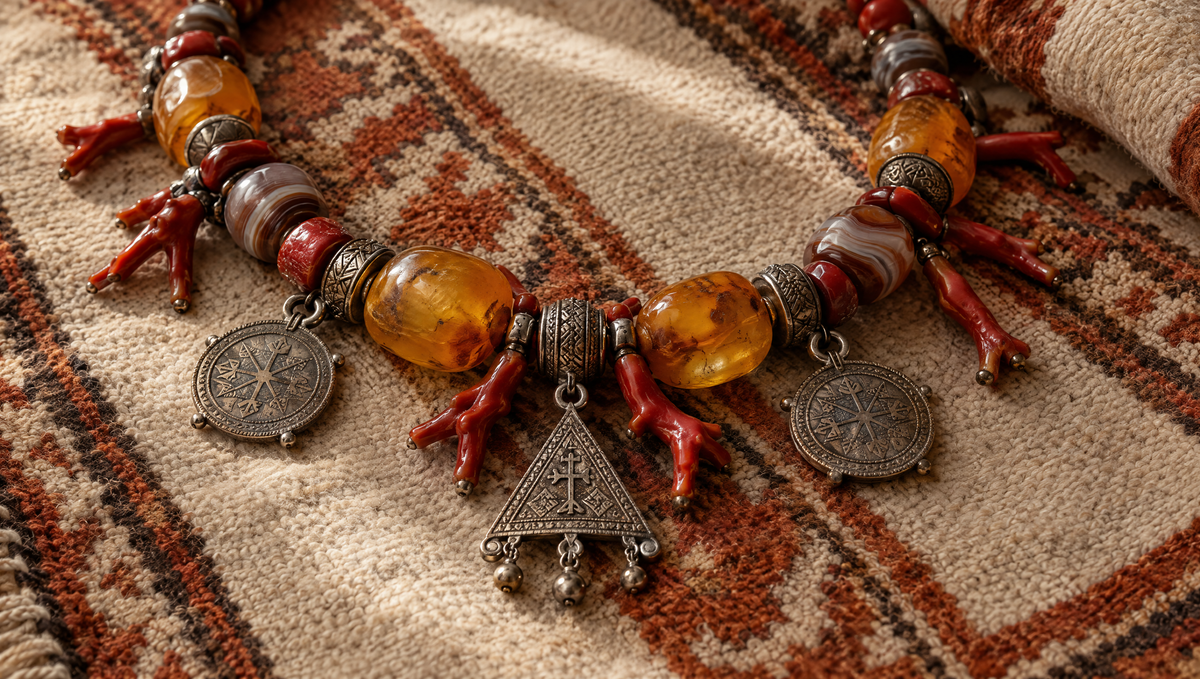
Silver is the backbone of almost every Berber piece. Beyond its value, it was traditionally associated with purity and with baraka, the blessing that protects a home and a family. Worn close to the skin, silver was believed to keep the body in balance and to turn away bad intentions.
Coral: the red of life
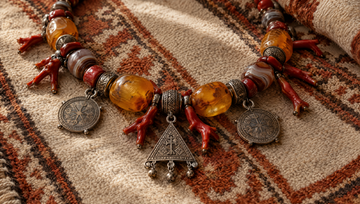
Red coral, brought from the Mediterranean, was among the most treasured materials in Amazigh jewelry. Its color evokes blood, vitality and fertility, and it was widely worn as protection against the evil eye. Large coral branches and beads often appear at the center of bridal necklaces and headdresses, where the eye falls first.
Because genuine coral became rare and costly, many old necklaces also contain red glass or other substitutes. This is not a flaw: it reflects the reality of trade and the resourcefulness of the women who assembled these pieces over a lifetime.
Amber: warmth and prosperity
The large honey-colored beads seen in southern Moroccan necklaces are commonly called amber. They were associated with wealth, warmth and good fortune, and the biggest beads could signal the status of a family. Some were true fossil resin; many others, especially from the twentieth century, were early synthetic resins that came to Morocco through trade. Both are now part of the history of these necklaces.
Agate and stone: strength and grounding
Banded agates, carnelian and other stones, often very old and sometimes traded across the Sahara over centuries, add depth and earthy tones. They were valued for their durability and were often thought to bring strength and steadiness to the wearer.
Enamel: green, yellow and the light within
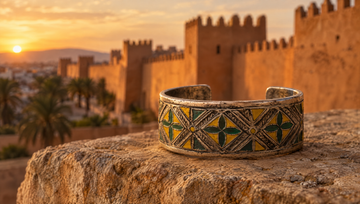
In the Anti-Atlas and around Tiznit, silversmiths filled silver cells with fired enamel. Green is often linked with fertility and the promise of spring, yellow with light and abundance. These colors turn a silver surface into something luminous and alive.
Shapes that watch over you
Color works together with form. Some motifs appear again and again in Berber jewelry:
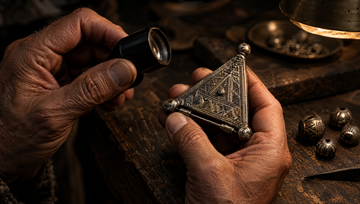
- The triangle, a protective shape found on fibulae and pendants.
- The five-fingered hand, or khamsa, raised against the evil eye.
- The cross and the star, especially in Tuareg jewelry, often linked to orientation and to the four directions.
- The circle and the eye, symbols of watchfulness and continuity.
A necklace built over a lifetime
Many old necklaces were not made in one moment. Beads were added at a marriage, a birth or a good harvest, replaced after a hard year, restrung by a daughter. When you hold one today, you are holding several generations of choices.
That is what we look for at RAIS: pieces whose colors still carry their meaning, and whose wear still tells their story.