


Recent posts
Oct 03, 2026
Oct 03, 2026
Coral, Amber and Silver: Reading...
Oct 03, 2026
The Silver of Tiznit: Where...
- Oct 03, 2026
- By RAIS
- 0 comments
How to Recognize Authentic Antique Berber Jewelry: 7 Signs to Look For
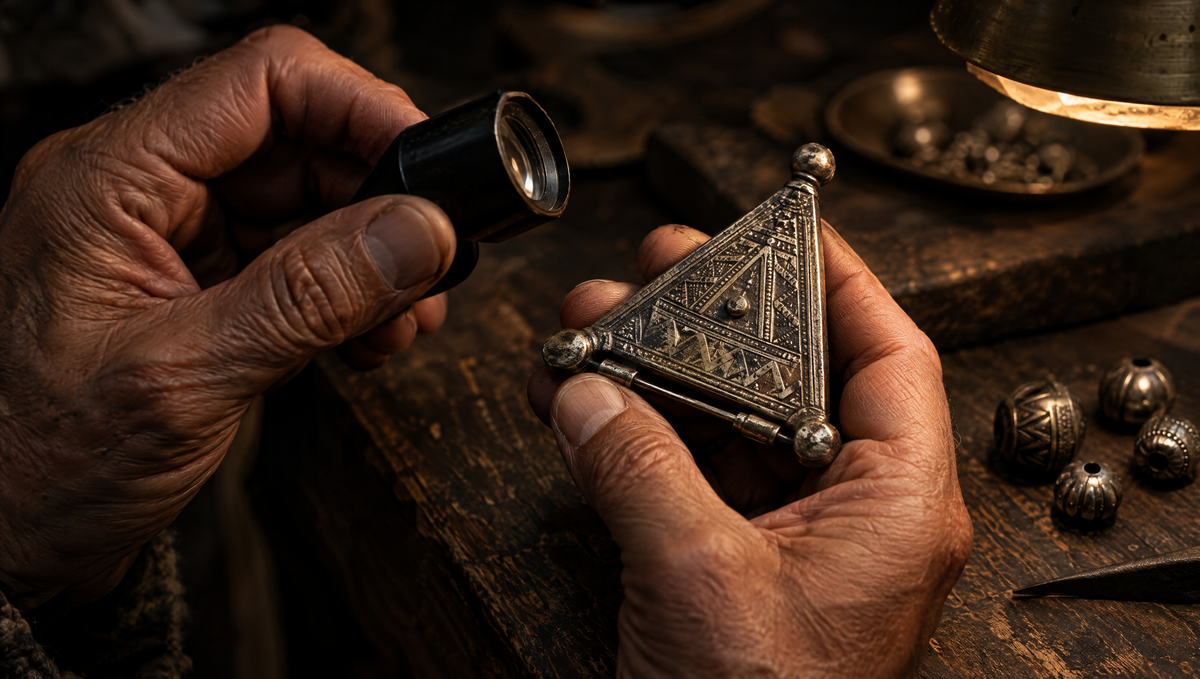
As interest in Berber jewelry grows, so does the number of new pieces sold as "antique". Telling them apart is not always easy, even for experienced eyes. Here are the signs we look at before any piece joins the RAIS collection.
1. Look at the wear, not only the shine
A piece that has been worn for decades tells you so. High points are softened and polished by skin and fabric. Engraved lines and recesses keep a darker patina, because they were never rubbed clean. Edges are rounded rather than sharp. Artificial aging tends to look uniform: the same grey everywhere, with no logic to where the wear falls.
2. Expect the irregularities of the hand
Antique Berber jewelry was made with simple tools. Two sides of a bracelet are rarely identical; engraving varies slightly in depth; granules and wires are soldered by hand and not always perfectly aligned. Perfect symmetry and crisp, repeated details often point to modern casting.
3. Feel the weight and the silver
Traditional pieces were often made from melted coins and have a reassuring weight. The silver content of old village jewelry varies, and it is not always sterling, which is normal. Very light pieces, or those whose surface reveals a different metal underneath where it is worn, deserve a closer look.
4. Understand the materials honestly
This is where many buyers are misled, in both directions.
- Coral: genuine old coral shows natural variations in color and small pits. Dyed stone or uniform red glass looks flat and too perfect.
- Amber: true amber and old synthetic resins both appear in historic necklaces. Old resin beads can be authentic to the period, so their presence does not mean a piece is fake. What matters is that the seller describes them truthfully.
- Glass and other beads: trade beads, glass and early plastics were part of real Amazigh necklaces in the twentieth century. They are part of the story.
A trustworthy seller tells you exactly what a piece contains, rather than calling everything "coral" or "amber".
5. Check the construction and repairs
Old pieces were often repaired by their owners: a replaced chain, a resoldered clasp, a bead restrung on new thread. These traces are signs of a life, not defects. Modern findings, machine-made chains or industrial clasps on an otherwise old piece should simply be disclosed.
6. Look for hallmarks, without depending on them
Some twentieth-century Moroccan pieces carry official silver marks, which can help with dating. Many older village pieces carry none at all. The absence of a hallmark does not make a piece fake, and a stamped mark alone does not prove age.
7. Ask about provenance
Where was the piece found? Which region does its style belong to: Tiznit, the Anti-Atlas, the Sahara, Tuareg country? A serious seller can answer, or will tell you honestly when the history is unknown.
Our promise
Every RAIS piece is examined by hand and described as it truly is: its materials, its condition, its repairs, and what we know of its origin. We believe an honest description is part of the respect owed to an object that has already lived so long.
If you have a question about any piece, write to us. We are always happy to tell you more.